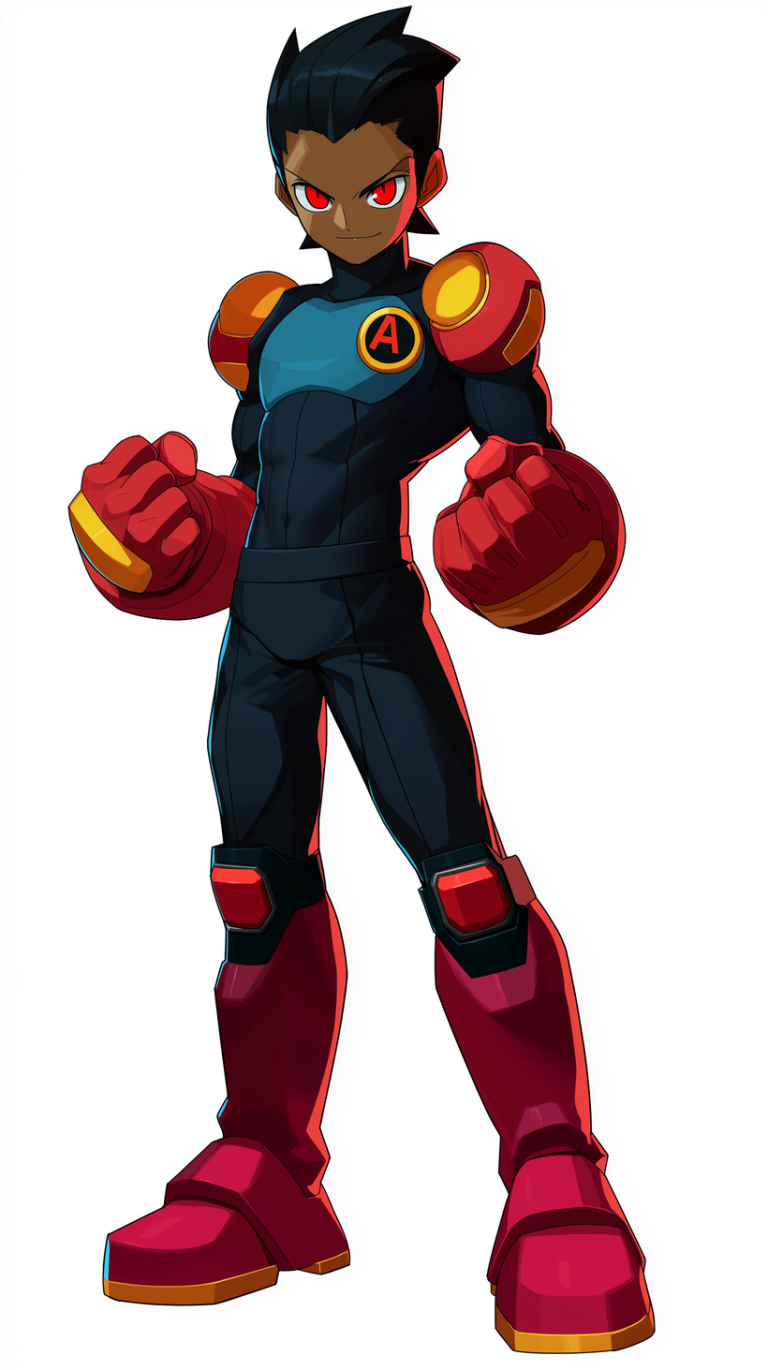
Massive Disaster III-18
Darkness was.
Darkness was many things.
Darkness was far more than just the simple absence of light.
It had texture, density… character.
Scot had learned a lot about the nature of darkness over the past nine days. He learned about the way it shifted and moved, the way it would sometimes fill itself with phantom flashes of color that his brain manufactured to do something with the void where visual input should be.
Sometimes the darkness felt like thick cotton pressing against his face and other times it stretched endlessly in all directions, a universe of nothing with him suspended at its center.
The hospital room smelled wrong—antiseptic and artificial, the fragrance chemicals failing to mask the underlying odor of illness and disinfectant. He’d mapped every surface within reach: the bed with its mechanical controls (seventeen buttons, each with a distinct shape and purpose), the side table (distance: 0.46 meters from bed edge), the doorway (3.2 meters forward, 0.7 meters left of bed foot).
His fingers traced the bandages wrapped around his eyes for the twelfth time today. The doctors had stopped telling him not to touch. Maybe they’d realized it was pointless, or maybe they just pitied him enough to let him have this one small rebellion.
“From what we can tell, the burns around your orbital area are healing as expected,” Dr. Varma had told him earlier this morning, the woman never stepping closer than one meter from his bedside. Her voice always carried that careful neutrality medical professionals developed—not unkind, but always guarded, withholding the full truth. “The scarring will be extensive, but manageable with future treatments.”
She hadn’t mentioned his eyes. Not directly. Not since the initial diagnosis: corneal destruction, optic nerve damage, retinal detachment. “Permanent vision loss” had been the term. Clinical. Final.
At this point, he had processed it just like any other data point, nodding his head as she spoke because people liked when you did that. It made them feel heard. People really liked that, more than they ever really realized until they did the sort of deep thinking that they refused to ever do for most things.
It wasn’t enough for someone to stand there, listening patiently. They expected nodding, smiling, or even questions; no matter how basic or pointless whatever they were saying happened to be.
But Scot didn’t mind at this point.
After the doctor had left his room, he’d been cataloging sounds all morning: the nurses’ shift change at 0700 (different footsteps, different cologne), meal delivery at 0830 (trays metallic and jarring), the oncology patient next door receiving visitors at 0915 (three distinct voices, one noticeably strained).
All to keep his mind of Room 422.
Critical care unit. Second-degree burns over 70% of her body. Third-degree burns on her right arm and both legs. Shattered ribs. Broken clavicle. Lung damage from smoke inhalation. Her laugh—bright and sudden like a meteor shower—silenced by a breathing tube.
Three surgeries in nine days. “Touch and go” was how the night nurse had described it when she thought Scot was asleep.
“Mr. Winters?”
The voice was not unfamiliar. Young male. Confident. Slight urban accent that didn’t fit the university-hospital setting.
Scot turned his head toward the sound, a reflex from when his eyes still mattered. “Yes?”
“I’m Zedd Victors.”
The name matched with the voice and Scot’s mind flickered with a face in his mind’s eye. Zedd Victors. The V-Shades presentation right before the attack. The fascinating discussion about adaptive algorithms and quantum processing limitations. The ice cream parlor with its ridiculous claim of something as nonsensical as neural-reactive flavoring.
Then…
Well, everything else.
“Mr. Victors,” Scot replied, straightening in his bed and fixing his posture as if this was an internship interview. “I still have questions about the power consumption ratios you outlined.”
A sound—possibly surprise. “You’re still on that? You remember that? After everything that happened?”
“I remember everything,” Scot said simply. He didn’t elaborate. Didn’t mention how the last visual memory he would ever have was of glass shattering, of Zedd Victors dropping into a combat stance that belonged on someone with military training, not a corporate CEO.
Didn’t mention how he’d pulled Maddy behind that planter, instincts from his JROTC training kicking in without conscious thought.
Didn’t mention how he’d felt her blood on his hands before something had exploded, sending shrapnel into his face.
A chair scraped against the floor—metal legs on composite tile, positioned to Scot’s right. “How’s your girlfriend?” Zedd asked, as if reading his thoughts. “Grey, right? Madelyn Grey?”
Scot’s breath caught. “Critical, but stable.” His voice came out flatter than he intended. “Third-degree burns covering most of her body. Fourth-degree on her right arm and legs. They don’t believe she’ll regain motor function. Three surgeries already. More scheduled.” The clinical recitation helped maintain control, distance. “One doctor mentioned ‘catastrophic tissue damage.’ I don’t think they expect full recovery.”
Silence hung between them for 3.4 seconds.
“That’s why I’m here,” Zedd said finally. Something shifted—perhaps leaning forward in the chair. “I think I can help both of you.”
Scot’s head tilted slightly, a questioning gesture he’d retained. “Meaning?”
“Meaning I have technology that can fix your eyes.” The words came quickly, efficiently. “Not just fix them. Enhance them. And I can help Maddy too—repair the burns, restore function, accelerate healing far beyond what conventional medicine can offer.”
Scot’s hands stilled on the sheets. His breathing pattern shifted—slightly elevated, controlled. “The doctors said the damage to my optic nerves is permanent. And Maddy’s burns… they’re saying years of skin grafts, with limited mobility in her right arm and both legs even then.”
“Conventional medicine has limitations,” Zedd replied. “I don’t.”
The confidence in his voice didn’t waver. No hesitation. No qualifying statements. Just absolute certainty.
Scot processed this, running the logical pathways. “In exchange for what?”
A sound—possibly Zedd shifting position again. “Smart question.” A slight pause. “I need people. The right kind of people. What happened at Nova Kasiopea—that was targeted. Not random. They came for me, but civilians got caught in the crossfire. People who couldn’t protect themselves.”
“Like me,” Scot said flatly.
“Like everyone,” Zedd countered. “But you’re different. The way you moved during the attack—that wasn’t panic. That was training. The questions you asked before everything went to hell—those weren’t standard undergraduate curiosity. You think differently. See patterns. Analyze without emotional interference.”
Scot felt something tighten in his chest. Recognition. Being seen in a way most people never bothered to attempt.
“What exactly are you offering?” he asked, focusing on precision.
“A trade,” Zedd replied. “I fix your eyes—give you sight beyond anything you had before. I help Maddy—repair the burns, work on restoring function, give her the best chance possible. In return, you work with me. Become part of something designed to protect people who can’t protect themselves.”
“You’re building a security force,” Scot concluded.
“I’m building a team,” Zedd corrected. “Starting with someone I’ve already enhanced. You’d be the second.”
Scot considered this, mind working through implications with mathematical precision. “The enhancement you’re offering—is it similar to what I saw during the attack? The speed, the strength?”
“Yes,” Zedd confirmed. “But customized. Different capabilities for different team members.”
“Does this involve genetic modification?”
“Among other things,” Zedd admitted. “Nothing that would compromise who you are. Just amplify what’s already there.”
Scot considered this, mind working through implications with mathematical precision. “Could this technology help Maddy? Completely?”
A pause. 1.7 seconds.
“I won’t lie to you,” Zedd said finally. “Her injuries are severe. With conventional medicine, she’s looking at years of painful recovery, multiple surgeries, and permanent disability. With my technology, I can guarantee significant improvement. Burns healed, pain eliminated, mobility restored.” Another pause. “I can’t promise 100% restoration of everything. But I can promise better than anything the doctors here can do. Exponentially better.”
Scot’s fingers moved from the sheets to the bandages again, tracing their circumference. Nine days of darkness. Nine days of rebuilding his understanding of a world he could no longer see. Nine days of sitting beside Maddy when they wheeled him to her room, holding a hand that couldn’t feel his touch through damaged nerve endings.
“They’ve put her in a medically induced coma,” Scot said, voice steady despite the weight behind the words. “The pain was too severe to manage otherwise.”
“I can help with that,” Zedd stated simply.
“How soon?”
“I could start immediately. Have her transferred to my private facility as soon as she’s stable enough to move.”
Scot processed this. The variables aligned in clear patterns, probability trees branching outward from this moment of decision. “Your offer seems conditional.”
“Not entirely. I’ll help Maddy regardless of what you decide. That’s not negotiable—I don’t leverage people’s suffering.” Something in Zedd’s voice hardened. “But I want you on my team. Your mind, your abilities. I think you want that too.”
Scot considered his options with methodical thoroughness. The logical choice was clear: accept the offer. The potential benefits overwhelmingly outweighed the risks, especially given Maddy’s condition and his own permanent blindness.
And yet…
“What…” Scot swallowed, ignoring the slight twinge in his eyes as he narrowed them instinctively behind his eyes. “What would the purpose behind this team be… exactly?
“Ensuring the safety of human colonies out in the Traverse and Terminus. Respond to threats conventional security can’t handle, like raids and terrorist asaults, Batarian or otherwise. Give humanity options beyond relying on Alliance military or Citadel intervention.” Zedd’s voice gained momentum as he spoke, despite the inherent vagueness the CEO was purposely maintaining. “You’re smart enough to tell that the attack at Nova Kasiopea was not something as simple as a raid or an assasination.”
“If it was only an assasination, you’d be the sole target,” Scot interjected. “Not to say that you weren’t clearly the primary one.”
Zedd was silent for a few seconds. “True, but I have reason to believe that whatever this was meant to be, it was not the last of its kind.”
Scot let out a silent breath, hands clenched tight on the cloth of his sheets. Without sight, his path in academia and career prospects had nowhere to go. His plans—the careful, meticulous roadmap he’d constructed for his future—had been obliterated along with his vision. Maddy’s injuries…
The best path for her… she’d be lucky if only her education was cut short.
Logical analysis indicated only one viable choice.
“I need to see her first,” he said, then corrected himself: “I need to be with her when you explain this. She should have a choice too.”
“Of course,” Zedd agreed. “When she’s conscious enough to understand.”
“And I need your honest assessment,” Scot added. “Not what you think I want to hear. What you genuinely believe you can do for her.”
A shift in the air—Zedd standing, perhaps. When he spoke, his voice came from slightly above now. “I believe I can save her life. I believe I can eliminate her pain. I believe I can restore significant function that conventional medicine would consider lost forever.” A pause. “I can’t promise perfection. But I can promise to do better than anyone else on this planet—or any other—could do for her. And I promise to do my absolute best.”
Scot nodded slowly, processing the nuance in those words. The certainty mixed with honest limitation. The absence of false promises.
His fingers traced the bandages one final time, memorizing the sensation of darkness wrapped around his head. Soon, perhaps, he would see again. But not the same way. Never the same way.
“One last question,” he said. “Why me?”
The silence stretched exactly 2.1 seconds before Zedd answered.
“Because you didn’t run,” he said finally. “When the shooting started, when everyone else panicked, you moved with purpose. You protected others. And because before all that, you asked questions no one else thought to ask.” A pause. “People like that are rare. Worth finding. Worth fixing.”
Something settled in Scot’s chest—a calculation completed, a problem solved. An answer that fit perfectly into the empty space where uncertainty had been.
“When can we start?”